Fox & Hare financial adviser, Julie Bullen, recently joined the Equity Mates Investing Podcast to tackle the hard questions from their community.
Hot on the heels of the federal government’s budget announcement, there were discussions about the proposed changes to tax benefits alongside some of the more perennial classics, like; where to invest, emergency funds, merging finances and more!
In Short:
💼 The Budget:
The federal budget announcements should not dictate or derail your financial decisions; the goal should always be a robust, long-term wealth creation strategy that is not reliant on tax discounts and benefits.
🏠 Property vs. Shares:
There is no universally “better” investment – your choice between property and shares should be dictated by your lifestyle goals and timelines.
🛡️ Emergency Funds:
Establishing a dedicated emergency fund is an act of financial self-care, providing breathing room and support if something goes wrong.
Watch the video or read the article below!
Your Next Step:
Read on or watch the podcast recording below. If you want to discuss your next move (or non-move!) with pros, you can reach out to your team directly through the personal finance portal.
The Budget
First up, Julie, Bryce and Ren jumped on the elephant in the room – Jim Chalmer’s recent budget.
Labeled the “most controversial budget of the decade,” Julie, takes the position that the reality is far more tempered.
“There was a lot of hype going into it,” she tells the team. “And honestly, I feel like it’s a little bit of a non-event. The reality is that for the everyday person, it’s not going to materially change the way they should be investing.”
There were three main topics dominating listener questions:
Negative Gearing:
Julie starts with the disclaimer that negative gearing is a benefit of an investment and should not be ‘the’ strategy. She argues that nobody should be purchasing an investment property primarily for the sake of negative gearing.
Her view is that the primary drivers for property investment – long-term wealth creation, leverage, and the value of a fixed asset – should be viewed independently of tax rules and, if the fundamentals are right, should not need to rely on government support long term.

Julie argues that nobody should be purchasing an investment property primarily for the sake of negative gearing or any other discount of benefit.
Capital Gains:
The changes to Capital Gains Tax have created a lot of headlines (and memes), but Julie urges listeners to keep things in perspective.
“Capital Gains Tax is essentially a tax on profit,” she explains. “When you buy an asset – like a property or shares – and sell it later for more than you paid for it, that profit is called a ‘capital gain.’ And the government taxes that gain.”
Her perspective is that while investors should always be aware of the tax implications of their decisions, tax should be viewed as a cost of doing business rather than the sole driver of an investment strategy.
She acknowledges that while changes to the “rules” of the game can be frustrating, they should not dictate a complete shift in strategy for long-term investors. “The only people paying capital gains are those people who made money,” she notes “and tax is a necessary cost of doing business.”
She cautions against making emotional or reactionary decisions, such as selling off high-quality assets because the tax treatment “might” be changing.
“Tax shouldn’t be the primary driver of an investment strategy.”
For younger Australians focused on long-term growth, she suggests that the most effective strategy is to stay the course with quality assets, rather than trying to outrun tax policy that is constantly in flux.
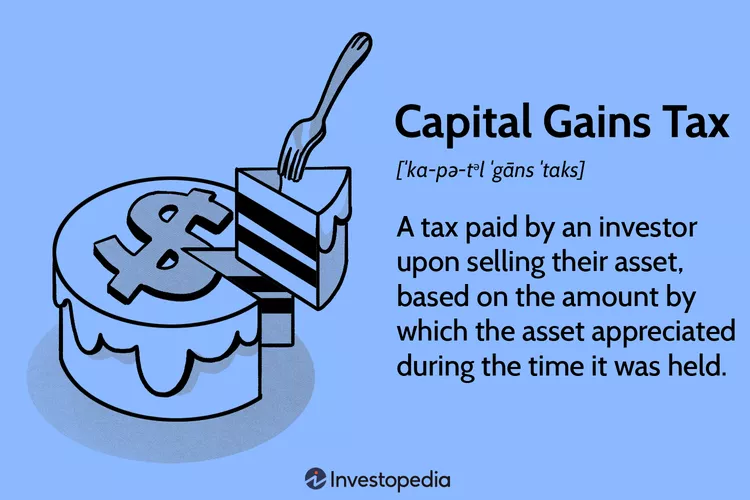
“Capital Gains Tax is essentially a tax on profit,” Julie explains. And her perspective is that while investors should always be aware of the tax implications of their decisions, tax should be viewed as a cost of doing business rather than the sole driver of an investment strategy.
Discretionary Trusts:
Addressing concerns over trust tax changes, Julie noted that while there will be an impact for some, “it shouldn’t materially impact the reason that you have a trust.”
She emphasised that the primary functions of a trust – succession planning, asset protection, and managing generational wealth – remain intact.
“Tax benefits were a nice perk,” she notes, “but they should never have become the primary reason that people were engaging with a trust.”
Ultimately, Julie’s message around the proposed budget changes was one of composure.
“It’s a really good opportunity to review your situation,” she says “but it’s not the time for people to panic.”

Missed the discussion? No stress. Hit the image to watch the full podcast with Julie and the Equity Mates team.
Property vs. Shares
Next up, Bryce and Alec put a question from an anonymous listener to Julie;
“If I have $1 million, should I invest the one million in property or should I invest in equity? Let’s say we’ll hold it for at least 10 years. What is the outcome in 10 years’ time?”
It’s a classic showdown, and a question we hear often from our own members here at Fox & Hare. Julie’s response was characteristically direct:
“If I had a million dollars and I had to choose just one, I’d put it straight into the stock market.”
Why the Stock Market Takes the Lead
Julie’s reasoning focuses on ease of access and the fundamental “why” behind investment goals. In her eyes, for a million-dollar investment, the stock market offers advantages that property just can’t match:
Liquidity:
In plain English, liquidity just means how fast you can turn an investment back into cash.
With a house, your money is trapped inside four walls and a roof. Selling it takes months of open homes and paperwork, and you have to sell the whole thing – you can’t quickly sell the bathroom for a quick cash injection.
With shares, you can sell them at the click of a button and have the cash in your bank account almost instantly.
Operational Efficiency:
Shares don’t come with the management, maintenance, or high transactional costs of owning and selling property. Shares a low-cost, hands-off way to access long-term growth.
The Leverage Trap:
Most people buy property because they don’t have the full purchase price on hand. They use a downpayment (the deposit!) to borrow the rest of the cash from a bank (a tactic called leverage).
Julie notes that if you already have the $1 million in cash, you’ve essentially bypassed the need for that leverage anyway. “You’ve already got the million dollars – so why not just put it into the market” she asks.
Why not have both?
While Julie took a very clear stance in the hypothetical, she did challenge the underlying premise of the question.
“You’ve got a million dollars – why not do both?”
“For the Fox & Hare members I work with every day, wealth building is very rarely about choosing a side; it’s about building a portfolio that balances growth with efficiency.” She says,
“The goal is for us to ensure their strategies align with their broader life goals without creating unnecessary stress.”

The property Vs shares conversation is not a clear cut ‘better or worse’ situation says Julie. Rather, the individuals long term goals and immediate situation will determine which is the better choice.
Emergency Funds & Cashflow
Next up, Bryce and Alec put a question from listener Hannah to Julie:
“Everyone says I need a three-to-six-month emergency fund, but honestly, that just feels like a lot of ‘dead money’ sitting there doing nothing. Is that really necessary?”
Alec also chimed in here, noting that for a lot of people in their 20s and 30s, that amount of cash feels like a huge weight that could be put to better use, like paying down a mortgage or investing in the market.
Julie responded by shifting the perspective from “investing” to “insuring your lifestyle”:
“It’s not dead money; it’s buying you choices.” She says.
Your Buffer is Your Freedom
Julie explained that it would be more useful to try and totally delineate that emergency fund from its potential as an investment meant to grow your wealth; to its potential as a tool for your security, and her take is that the “right” amount depends entirely on your specific situation:
- The “Sleep Well at Night” Number:
If you are a sole trader, your income can jump around month-to-month, meaning you likely need a larger “shock absorber” to keep the lights on during quiet periods – or if something goes wrong.Without that buffer, one slow month could force you to dip into your investments at the wrong time or rely on high-interest credit. Imagine having to sell down at the bottom of the market or sell a property because you needed cash.
- The Stable Income Scenario:
If you are in a secure, salaried role with consistent pay, you might be comfortable with a smaller buffer, which frees up more of your cash to work for you in the market.
- The “Safety Net” Reality:
Regardless of your career or situation, there is hard truth that should be considered here: you will never regret having a solid buffer if something does actually go wrong. That cash is could be the difference between a minor inconvenience from turning into a major financial crisis.
The goal is to hold enough cash so that when life throws a curveball – a sudden car repair, a medical bill, or an unexpected gap in work – you don’t have to panic-sell your investments or rack up debt.
“You want your money working for you, but you also need a safety net to ensure you aren’t forced into bad decisions when things go wrong,” Julie added.

Julie cautions against viewing an emergency fund as “dead money” and suggests shifting your perspective to seeing it as the insurance policy that guarantees you’ll never be forced to make a bad financial decision under pressure.
Joint Finances and Kids
To wrap up, the team tackled the heavy hitters: joint finances and the cost of kids. Sophie asked about balancing a large income gap in a relationship, while Alex wanted to know how to prepare for the actual costs of starting a family.
Managing Money as a Couple
Sophie asked:
“My partner earns $100,000 more than me. We have joint and individual accounts, but the whole thing feels uneven. How do other couples generally structure this?”
When the numbers don’t match, it’s easy for the conversation to get stuck on “what’s fair.”
Bryce and Alec agreed that this is a classic source of friction, but Julie pushed the conversation toward looking at the bigger picture. She argues that while keeping money separate might feel comfortable early on, as your life goals merge, your systems will often need to evolve:
“Personally, I believe one family, one money system.
There’s obviously a time frame on that. If you’re dating someone that’s pretty new, you don’t want to be giving them access to everything you’ve got. But fast forward a while and it would be very difficult to be living on two separate scales.”
Julie also challenged the idea that an income gap necessarily means one person is contributing “less.”
In her view, financial contributions are only part of the equation:
“Why are you earning $100,000 less? [It] may be a difference in pay, but for a lot of families, it could also be because you’ve chosen to stay home with the kids. When we think about finances and families, I don’t think it should be all about the numbers, it’s what everyone’s contributing – and that is definitely not always financial.”
Julie also points out that the structural benefits of joint finances – such as managing marginal tax rates and consolidating assets – often outweigh the initial comfort of keeping things separate.
By viewing the household as a single entity, couples can often make smarter, tax-efficient decisions that neither could achieve as effectively on their own.

You don’t want to be merging your finances after the first date, says Julie. But, she says, there are definitely many upsides to combining your financial world with your partner over the long term.
Preparing for a family
Next, the team turned to listener named Alex, who submitted a question about preparing for the next big milestone:
“We’re thinking about kids in the next two years. What should we be doing financially right now that we’ll thank ourselves for later?”
Julie leaned into her experience as both an advisor and a mum to highlight an often overlooked aspect of parenthood.
“The most expensive part of having kids is definitely not the kid!” She shares. “It’s dropping two-incomes down to one. So preparing for that early is going to have huge benefits when you do eventually bring a baby into the world.”
Her advice was centred on proactive planning rather than reactive budgeting. She urged listeners to get a handle on their specific “cashflow deficit” well in advance:
“Get really clear on your maternity or paternity leave entitlements from work… The next step to that then is get really clear on what your expenses are.
If you know you’re going to be in a deficit for nine months, you can work out exactly how much money you need in savings to completely cover that and not have financial stress during the time that you’re off.” She says.
Beyond the immediate budget, Julie highlights the critical step that many young families overlook until it’s too late: securing adequate personal insurance.
“Get your life insurance, get your income protection and your total disability covers in place so that if something unthinkable happens or you get hit by an illness or injury, your family and your kids are looked after. They are relying on you and that reality will not change if you are sick, injured or worse.
This is a really, really important one.”

High-achieving, experienced, and always in your corner. Your Fox & Hare advice team are always working to ensure you are in the best possible possible position – please reach out via the PFP with any questions!
About Fox & Hare:
Fox & Hare are the Millennial and Gen Z advisers, 100% focused on helping Australia’s 20-45 year olds buy property, get invested and achieve financial freedom.
When it comes to managing your money, it’s normal to feel uncertain or scared of making the wrong decision; it’s normal to feel so overwhelmed that, despite knowing you need to do something, the first step seems impossible; and it’s also incredibly normal to be earning great coin, but still feeling like you’re behind.
At Fox & Hare we create bespoke, long term financial plans that eliminate these uncertainties and put you in control of your financial future. No more option paralysis. No more fear of missing out. No more uncertainty about how to manage your money effectively.
If you:
- Want to achieve financial freedom.
- Want the flexibility to live your life on your terms, not tied to a job or working 24/7.
- Want your money to be working for you – not the other way around.
But the idea of learning how and where to start is more than a little daunting, let Fox & Hare do the legwork for you.
Read more insights from our experts
Emergency Town Hall: What’s Jim Doing with the Budget?
Mission-Critical or Media Noise? Financial freedom should be defined by your strategy, not the changing whims of the political cycle. Last week,...
Interior Design Decoded: Your Framework for a Beautiful, Functional Home.
The Cost vs. The Joy of Living Australia is a nation of property addicts. We talk about buying property, we talk about renting...
From Big Firms to Big Dreams: How Maira Engineered Her Corporate Exit.
The architecture of financial freedom. In short: Walking away from a secure income is terrifying, especially with a family and a mortgage – but...
What’s Donald Doing in Iran?
Stormy Seas Ahead? Recently, Fox & Hare Co-founder Glen Hare caught up with Hugh Lam, Investment Strategist at BetaShares, to discuss the escalating situation...
Your Membership has Changed: What’s New & How Will You Benefit?
Our memberships have changed! Recently, Fox & Hare made the most significant changes to our ongoing membership structures since the business’s inception. To ensure our...