The Cost vs. The Joy of Living
Australia is a nation of property addicts. We talk about buying property, we talk about renting property, but we rarely talk about actually living in a property.
The average Australian is spending roughly $950 per week on their mortgage or $700 on rent. That’s big money! And for such a significant cost, whether you’re renting or buying, that home should be perfect for you.
So, Fox & Hare Advisor Julie Bullen sat down with Martine Cooper, Founder of Melbourne’s Martine Cooper Interior Design (contact details at the bottom!), to discuss the ‘live and die by’ rules of interior design.
The goal? To find out how you can stop dreaming about the perfect space and go from ‘decorating’ to transforming your space into bespoke, one of a kind anchor for you, your goals and dreams.
Watch the video briefing or read the article below!
In Short:
✨ Feelings Over Photos: Martine says don’t start with a pretty picture; instead start with how you want the space to feel (e.g., cozy and calm vs. energising).
🗺️ Map the Mission: Create a mind map to answer the Why, What, How, When, and Who of your new home – before you ever step foot in a shop.
🛠️ Invest in the Fixed: Buy the best quality you can afford for things that aren’t moving for 10 years, like flooring and fixtures.
Your Next Step:
Read on or watch the webinar recording below. If you want to discuss how to budget for your next big renovation project, you can reach out to your team through the portal
Where to Start Your Renovation.
Most of us, says Martine, approach design backwards. We scroll through Instagram, see a photo of a room or space we love, and decide that’s the one for us.
But, she suggests we take a different approach to design in our homes and ‘start where we want to end.’
Rather than thinking about how you want the space to look, you can find better outcomes by starting with how you want the space to feel.
If you’re coming home from a high-pressure job, do you really need your living room to be a brightly coloured, high-energy music room, or do you need it to be a cozy, calm sanctuary to reset?
‘Before you even think about picking a paint swatch, you have to pick a feeling‘ she says.
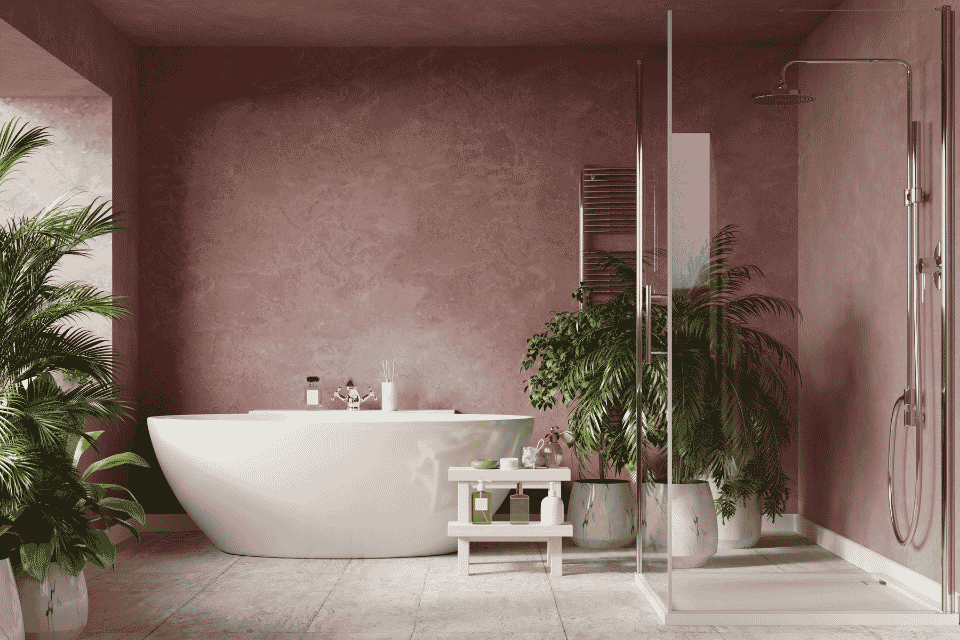
While a high-gloss, ultra-styled space might look incredible on your feed, it’s unlikely that a copy paste style will suit your needs or life. Martine suggests starting with the ‘feeling’ instead. Do you need a high-energy stage, or a quiet sanctuary to reset after a 10-hour day?
How to Plan Your Renovation
Once you’ve pinned down the vibe, Martine suggests a specific assignment to bridge the gap between that feeling and your four walls – what she calls “A Day in the Life.”
“Keep a notebook close by for a week,” she says. “Capture how you’re moving around your space in the morning, afternoon, and evening.”
This has nothing to do with “style” she says. “It’s to find the frictions in your home.
If you’re looking for a space to find your zen, but the stack of magazines in the corner that just keeps piling up, or the fact that the throw blankets don’t have a home is stressing you out, that’s counter productive to your goals.”
Once you’ve identified the “frictions” in your daily life – the realities of your space that clash with the vision and feeling your looking to create – it’s time to move to a formal brief.
Missed the whole session? Hit the image, plug in your headphones and get up to speed.
The Key to a Successful Reno.
Martine is a mind-mapper, and she uses a central goal to answer five key questions before a single trade is called: Why, What, How, When, and Who.
This is your strategy phase and the framework you produce might look like this:
Why am I making this change? (e.g., the current feeling is jarring).
What exactly am I going to do? (e.g., address the oversized couch).
How will it get done? (e.g., reorienting furniture vs. buying new).
When will this get done? What is the timeline? (e.g., is there a new baby or a Year 12 student studying for finals – making this a bad time for disruption?).
Who: Who do I need? (e.g., painters, removalists, trades).
If your “Why” is that the room feels cluttered, your “What” might be addressing a couch that’s too big for the space. But before you hit the shops, you need a realistic “How” – which starts with your budget and a timeline.
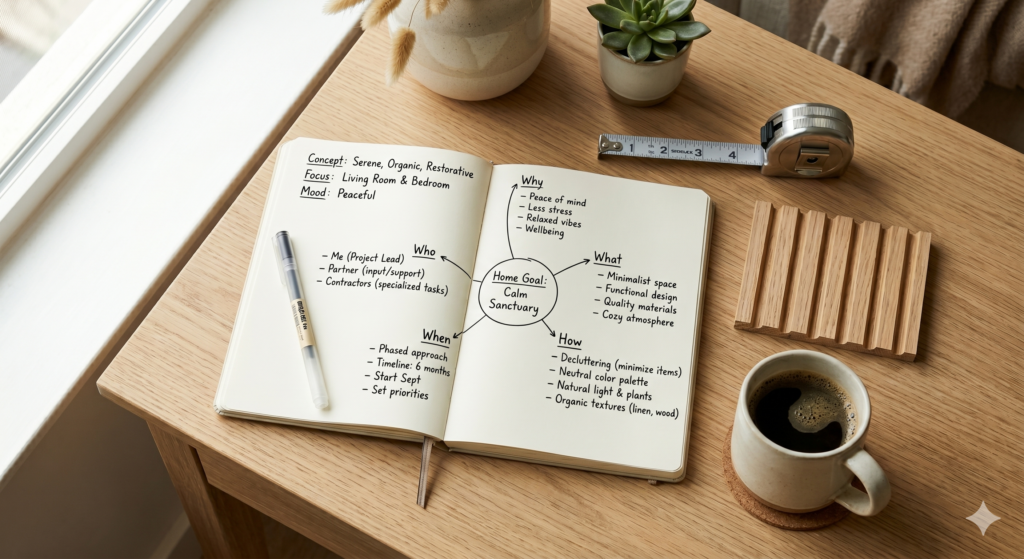
Martine’s “5 Ws” framework is her roadmap to avoiding expensive mistakes. By mapping out the Why, What, How, When, and Who, she is able transform a vague idea into a focused and strategic plan. AI GENERATED IMAGE.
How to Choose Colour 🌹🦋🥝
Finding Your Camp: Complementary vs. Contrast 🎨
Before you open a single paint tin, you need to work out which “colour camp” you live in. Martine explains that most people fall into one of two categories:
-
Complementary:
You prefer things to feel balanced, tonal, and quiet. You’re looking for colours that sit next to each other on the wheel to create a sense of calm. -
Contrast:
You want drama, brightness, and a bit of “pop”. You gravitate toward colours that sit opposite each other on the wheel to create high energy.
Working out where you stand can on colour will provide a useful guide for your creativity. Use that logic to select your primary palette and any accent pieces to ensure the room doesn’t feel like a collection of random, expensive, accidents!
Zoning for Vibe 🏘️
Of course, you don’t have to commit to one camp for your entire property. “You can be flexible and chose to design to zone your home based on the room’s purpose.” Says Martine.
“You might have three or four rooms in your home that all kind of fit into the complementary schemes,” She notes. “But for a specific area – like a record-playing room, a home bar, or a vibey sitting room – you might pivot to Contrast to create a totally different atmosphere. And that is totally fine!”
Nature’s Cheat Sheet 🌿
If you’re struggling to find combinations that actually work, look to your surroundings. Martine’s rule of thumb? Look to nature.
Colour is notoriously difficult because they all – even “white” and “grey” – have hidden undertones of yellow, red, or blue that you might not notice until it’s too late. Nature rarely seems to get it wrong. So, if you see colours interacting in a plant or a landscape and they feel “right,” they will very likely feel comfortable and cohesive in your home.
The Professional Nudge 💡
If you’re still feeling uncertain, don’t just guess—get a paint colour consultation. Most paint shops offer these, and Martine considers them a high-ROI activity.
“Having professional eyes identify those sneaky undertones before you buy 50 litres of paint can save you thousands in “redo” costs and ensure you actually achieve the feeling you’re after.” She says.

Nature never gets it wrong. If you’re struggling to find the perfect palette, look for inspiration in the wild. Martine’s top tip for a cohesive palette is to find a natural landscape or plant that feels “right” to you—if it works in there. Chances are it will work for you too!
How to Choose Your Fixtures 🚰💡🚪
The 10-Year Test: Are you Staying or Playing? 🏠
Once your palette is set, it’s time to look at the elements in your space that won’t be moving for a while, AKA your ‘hard fixtures’ – flooring, tiles, taps, sinks, etc.
Here, Martine’s rule of thumb is to let your long-term goals dictate your bravery:
-
The 10-Year Stay:
If this is your “forever” home or a long-term anchor, be brave. Choose the textures and materials that you genuinely love and that will make you feel good every day. -
The Investment Play:
If the property is a stepping stone or a short-term investment, play it safe. Look at what is currently performing well in the market and stick to a palette that has broad appeal for future buyers or renters.
Quality Over Everything ✨
Martine’s hard and fast rule for fixed items is to buy the best quality you can afford. Because these items are literally built into the property, they are notoriously difficult and expensive to change.
Choosing low-quality cabinetry or a cheaper stone, that later turns out to be porous, might save you a few dollars on the day, but the flow-on impacts of having to replace a failed vanity top or water-damaged floor in just a few years will far outweigh the initial saving.
By investing upfront, you aren’t just buying “style”—you’re avoiding a future maintenance trap that could derail your broader financial goals.
The good news? Buying high quality doesn’t always have to mean paying top-tier retail prices if you know where to look.
Maximising Value: Bespoke Style on a Budget 💎
You can still secure high-end, long-lasting materials and fixtures without a crippling price tag – if you’re willing to do a little legwork. Martine recommends signing up for the mailing lists of your favorite suppliers and staying alert for outlet sales or floor-stock discounts.
“Sign up to your favorite places and make sure that you’re on their mailing lists,” she suggests. “They often have outlet sales… at least 50% off what would be full price”.
But her absolute favorite “luxury hack” for non-designers is the Stone Offcut.
“Local stonemasons often have beautiful pieces of high-quality stone left over from massive jobs. These offcuts—which someone else paid thousands for—are often the perfect size for a laundry vanity, a powder room top, or a single feature shelf.
It really does elevate and give personality to a space,” She shares.
The “Biggest Bang for Your Buck” 💥
“I honestly think that the two areas that I see the most impact when we renovate, and it doesn’t matter what the budget is, is flooring and paint,” says Martine.
If your budget is tight, you don’t always need to rip up old timber boards.
“Sometimes when you work with a really good sander and repolisher, you can end up with a really nice result,” she notes. “It can change the way you feel about being in the home”.
Combined with a fresh coat of paint to create a comfortable backdrop, these are the smartest dollars you can spend to transform your atmosphere without a full structural overhaul.
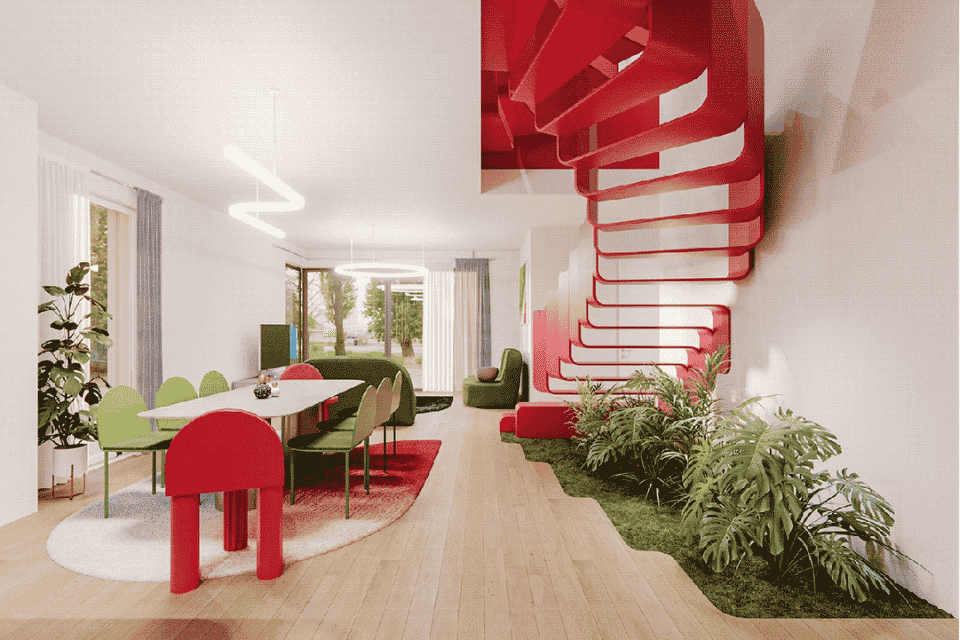
When a property is your “forever” home, you have the permission to be brave. Whether it’s a bold tile choice or a unique colour choice, these are the elements that transform a house into your home.
How to Choose Accessories 🛋️✨
Linking with Intent 🔗
“One of the biggest myths in design is that you have to pick a single label like ‘Japandi’ or ‘Hamptons’ and stick to it” Martine says.
You absolutely can mix styles, she shares, quoting a recent job that used a 15th-century Renaissance painting as the focal point for a 1970s mid-century style home.
The only requirement? That you do it with intent.
The secret to making different styles work together is creating subtle “links” throughout the room. You can do this by looking for common threads in:
-
Colour: Repeating a specific shade from a focal piece in a cushion or a vase.
-
Pattern & Shape: Repeating a geometric line or an arched curve in different areas.
- Proportion: Ensuring the scale of your pieces complements rather than crowds each other.
By creating these links, you pull a room together into a cohesive story rather than a collection of random objects.
The “Main Character” Strategy ⭐
To avoid a space that feels “too loud or in your face,” your room should have a clear focal point says Martine.
Think of the space like a stage play: you need one or two “main characters” – a fireplace, a large artwork, or a statement piece of furniture – and everything else should be the “supporting cast”.
“You want to journey around the room and enjoy what you’re seeing,” Martine says. “If every accessory is trying to steal the spotlight, your eye has nowhere to rest, and the room can starts to feel too busy or cluttered.”
The trick to making this feel intentional?
Use your “main stars” as a source for your ‘links’. If you have a beautiful green statement chair, repeat that specific tone of green in smaller accessories throughout the room to pull the eye along the journey.
How do you keep the supporting cast in check?
You can focus on texture over colour, says Martine. Instead of adding five different bright colours, add five different textures in similar tones—think a linen cushion next to a velvet one, paired with a chunky woven rug.
This can add depth and interest without making the room feel like it’s screaming for your attention. Of course, everybody’s taste is different. Don’t be afraid to try new things!
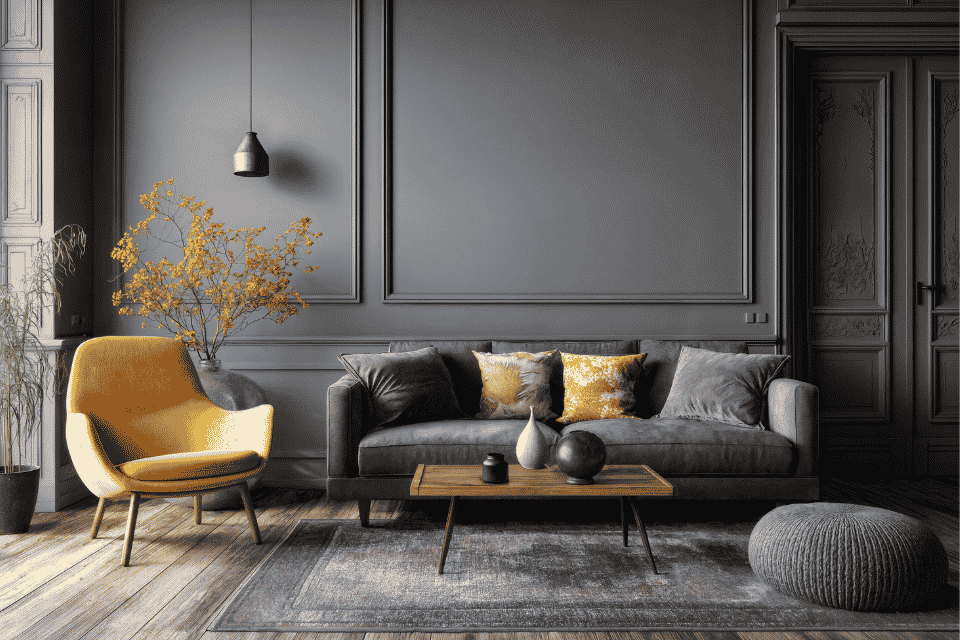
To avoid a room that feels busy or overwhelming, Martine advocates for every space to have a “main character” and a “supporting cast”. Notice how the neutral textures of the rug and sofa allow the yellow accents to pop without competing for attention?
How to Light Like a Pro 💡
Lighting is one of the most impactful yet underrated elements of a home.
Most people default to overhead downlights, but Martine recommends adding extra depth,by taking a layered approach to lighting.
The trick, she says, is to observe the natural light in your room at morning, noon, and night. Then, add in extra lighting based on what you want to highlight and how you’d like to feel:
🛋️ Focal & Task Lighting:
Don’t just light the air; light the objects. Use directional lighting to “wash” a textured brick or tiled wall or highlight a specific piece of art to create a point of interest.
🕯️ Moody & Ambient Lighting:
Move beyond “on or off”. Incorporate wall lights, dimmers, or floor lamps that can be softened in the evening to completely shift the energy of the room.
💡 The Renter’s Revolution:
If you’re in a rental and don’t have power points exactly where you need them, Martine recommends rechargeable LED lamps. These USB-powered lights can be carried wherever you like – indoors or outdoors – to create an instant atmosphere without needing an electrician.
Trust Your Gut: The Power of the Edit ✂️
As you put the finishing touches on your space, Martine’s final advice is to embrace the power of the edit. It’s easy to get carried away with accessories, but often the best thing you can do for your room is to step back.
“I often do this myself,” she shares.
“I’ll put all the stuff down, then I’ll take one thing away and realise – actually, that looks or feels great”.
By trusting your gut and giving your space room to breathe, you can ensure that your home remains a functional and up to task – whatever that looks like for you. Rather than a showroom or copy of a space that serves somebody else’s needs.
How to Contact Martine:
To see more of Martine’s work or to book a session to decode your own home’s potential, reach out via the links below.
Explore her work: MCID Website
Get inspired: Follow Martine on IG

High-achieving, experienced, and always in your corner. Your Fox & Hare advice team are always working to ensure you are in the best possible possible position – please reach out via the PFP with any questions!
About Fox & Hare:
Fox & Hare are the Millennial and Gen Z advisers, 100% focused on helping Australia’s 20-45 year olds buy property, get invested and achieve financial freedom.
When it comes to managing your money, it’s normal to feel uncertain or scared of making the wrong decision; it’s normal to feel so overwhelmed that, despite knowing you need to do something, the first step seems impossible; and it’s also incredibly normal to be earning great coin, but still feeling like you’re behind.
At Fox & Hare we create bespoke, long term financial plans that eliminate these uncertainties and put you in control of your financial future. No more option paralysis. No more fear of missing out. No more uncertainty about how to manage your money effectively.
If you:
- Want to achieve financial freedom.
- Want the flexibility to live your life on your terms, not tied to a job or working 24/7.
- Want your money to be working for you – not the other way around.
But the idea of learning how and where to start is more than a little daunting, let Fox & Hare do the legwork for you.
Read more insights from our experts
The Budget, $1,000,000, Emergency Funds and more: Julies on Equity Mates!
Fox & Hare financial adviser, Julie Bullen, recently joined the Equity Mates Investing Podcast to tackle the hard questions from their community. Hot on...
Emergency Town Hall: What’s Jim Doing with the Budget?
Mission-Critical or Media Noise? Financial freedom should be defined by your strategy, not the changing whims of the political cycle. Last week,...
From Big Firms to Big Dreams: How Maira Engineered Her Corporate Exit.
The architecture of financial freedom. In short: Walking away from a secure income is terrifying, especially with a family and a mortgage – but...
What’s Donald Doing in Iran?
Stormy Seas Ahead? Recently, Fox & Hare Co-founder Glen Hare caught up with Hugh Lam, Investment Strategist at BetaShares, to discuss the escalating situation...
Your Membership has Changed: What’s New & How Will You Benefit?
Our memberships have changed! Recently, Fox & Hare made the most significant changes to our ongoing membership structures since the business’s inception. To ensure our...